


Introduction
Hydrocarbon Leak Sensors—such as diesel, petrol, and lubricating oils—pose serious safety, environmental, and financial risks in buildings and industrial facilities. Whether it’s a generator room, fuel day tank, or chemical storage area, an undetected leak can lead to fire hazards, environmental contamination, and costly downtime.
A hydrocarbon leak sensor provides early warning, allowing facility managers to act before a minor spill becomes a disaster. In this guide, you’ll learn how these systems work, how to choose the right one, installation best practices, and where to buy them—including both premium and budget-friendly options.

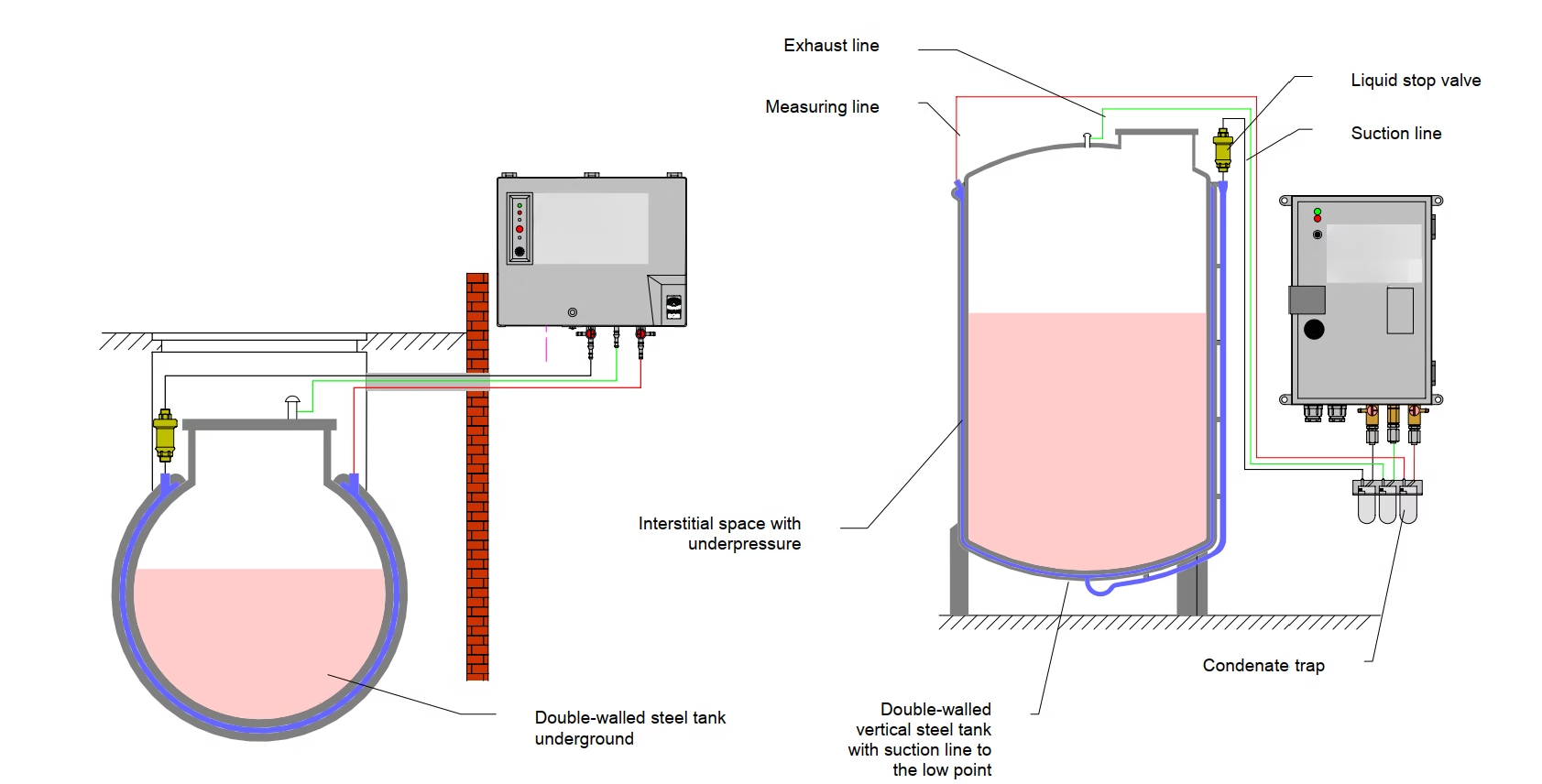
Image credits: https://www.cghnordic.com/en/produkter/
Why Hydrocarbon Leak Detection is Critical
-
Fire safety – Diesel and oil spills can ignite and spread quickly.
-
Environmental protection – Prevents soil and water contamination.
-
Equipment protection – Avoids damage to pumps, generators, and piping.
-
Compliance – Meets safety and insurance requirements in many regions.
-
Cost savings – Reduces cleanup costs and downtime.
How Hydrocarbon Leak Sensors Work
Hydrocarbon leak detection systems utilize specialized sensors that specifically detect hydrocarbons, while ignoring water. They come in two main forms:
1. Sensing Cable (Rope Sensor)
-
Detects hydrocarbons anywhere along its length.
-
Ideal for large coverage: fuel lines, generator perimeters, bund walls.
-
Selective—doesn’t false alarm from water.
-
Can pinpoint leak location with compatible controllers.
2. Point Sensor (Spot Detector)
-
Detects leaks in specific locations, such as a sump, drip tray, or low point.
-
Fast response for concentrated leak sources.
-
Often used together with cable sensors for complete coverage.
Where They’re Used
-
Generator rooms & day tanks
-
Fuel storage facilities
-
Chemical storage & industrial plants
-
Pipelines & pump stations
-
Marine & transport fuel depots
How to Choose the Right Hydrocarbon Leak Sensor
| Factor | Why It Matters | Recommendation |
|---|---|---|
| Coverage | Large area vs single point detection | Cable for large coverage, point sensor for small zones |
| Liquid Type | Diesel, petrol, crude oil, lubricants | Check compatibility with all used fuels |
| Environment | Indoor/outdoor, temperature, chemicals | UV, rodent, and corrosion protection for harsh sites |
| Response Time | Early warning can prevent disasters | Look for fast-acting sensors (<5 min for light fuels) |
| Integration | Link to BMS, SCADA, alarms | Choose BACnet/Modbus compatible controllers |
| Certifications | Safety approvals matter | Look for UL, FM, ATEX/IECEx for hazardous zones |
| Budget & Maintenance | Reusability, cleaning, spare parts | Reusable cables reduce long-term cost |
Installation Best Practices
-
Map leak risk zones – fuel lines, tank perimeters, generator base areas.
-
Secure sensing cables along the lowest points where liquids would flow.
-
Install point sensors inside drip trays, sumps, or bunds.
-
Label each sensor for easy location in alarms.
-
Integrate alarms into BMS or SMS/email alert systems.
-
Test regularly using approved hydrocarbon test fluids.
-
Clean reusable cables after real leak detection events.
Maintenance Checklist
-
Monthly: Visual inspection of cable routes.
-
Quarterly: Functional test with test fluid.
-
After leak: Repair source, clean/reset sensors, update logs.
Conclusion
Hydrocarbon leak sensors are not just an optional upgrade—they’re essential for safety, compliance, and cost control. Whether you’re managing a data center, hospital, or industrial plant, early detection can prevent disasters.
Investing in the right hydrocarbon leak detection system is a small cost compared to the potential losses from a spill.
Download our guide today and take the first step towards safer, smarter facility management.