



Valve actuators are indispensable in HVAC systems, managing approximately 80% of digital signals to control airflow and temperature precisely. Selecting the appropriate actuator is critical, as an improper choice can result in inefficiencies, increased operational costs, or system failure.
In-Depth Understanding of Valve Actuators in HVAC
Valve actuators transform energy into mechanical motion to precisely control valves and dampers, ensuring efficient airflow and fluid circulation. Today’s HVAC systems predominantly utilize electric and pneumatic actuators, each tailored for specific environmental conditions and control precision.
- Electric Actuators: These actuators offer high precision, seamless integration with Building Automation Systems (BAS), and about 80% operational efficiency. Equipped with motors and gearing systems, electric actuators provide exceptional accuracy, require minimal maintenance, and guarantee long-term reliability.
- Pneumatic Actuators: Utilizing compressed air, these actuators are ideal for environments requiring rapid actuation and significant force. Despite their relatively lower efficiency (10-25%), they excel in harsh environments, are robust, and initially cost-effective.
- Spring Return Actuators: Critical for safety-sensitive applications, these actuators automatically return to a predetermined safe position during power interruptions or loss of pneumatic pressure, thereby safeguarding the HVAC system’s integrity.
Comprehensive Modern Step-by-Step Actuator Selection Guide
1: Valve and Application Requirements
- Identify the valve type: two-way, three-way, or Pressure Independent Control Valve (PICV).
- Assess the media involved (e.g., water, glycol mixtures) and determine the necessary flow rates.
2: Detailed Torque Calculation
- Apply advanced torque calculation: Torque (lb-in) = Damper Area × Torque Factor.
- Incorporate at least a 25% safety margin to address potential unforeseen operational variances and component aging.
3: Fail-Safe Requirements
- Determine if the actuator needs to maintain its current position or revert to a safe position upon system failures.
- For critical applications, specifically opt for spring return actuators.
4: Actuator Type Selection Based on Efficiency and Application
- Prioritize electric actuators when precision and integration with advanced control systems are essential.
- Opt for pneumatic actuators in scenarios requiring rapid response, high torque, and robust environmental resilience.
5: Environmental Considerations
- For applications involving extreme temperatures or high humidity, choose actuators featuring integrated protective heaters and corrosion-resistant materials.
- Pneumatic actuators typically exhibit superior performance under extreme environmental conditions.
6: Control Signal Compatibility Check
- Ensure compatibility with control signals, including On/Off, floating-point, or modulating (0-10VDC, 4-20mA).
7: Mounting Flexibility and Accessories
- Select actuators capable of direct coupling to valve shafts to streamline installation.
- Employ accessory kits (e.g., foot mounts, linkage assemblies) to facilitate complex or constrained installations.
8: Duty Cycle and Operational Frequency Assessment
- Confirm that actuator specifications correspond with the expected operational duty cycle and frequency of your system, ensuring reliability and longevity.
9: Building Automation Systems Integration
- Validate actuator compatibility with contemporary Building Automation Systems for effective energy management.
- Emphasize actuators supporting advanced communication protocols such as BACnet and Modbus for comprehensive system integration.
10: Vendor Support, Maintenance, and Reliability
- Select actuators from trusted manufacturers offering excellent technical support and established product reliability.
- Evaluate total lifecycle costs, encompassing initial investments, maintenance requirements, and operational efficiency.
Types of Valve Actuators and Modern HVAC Applications
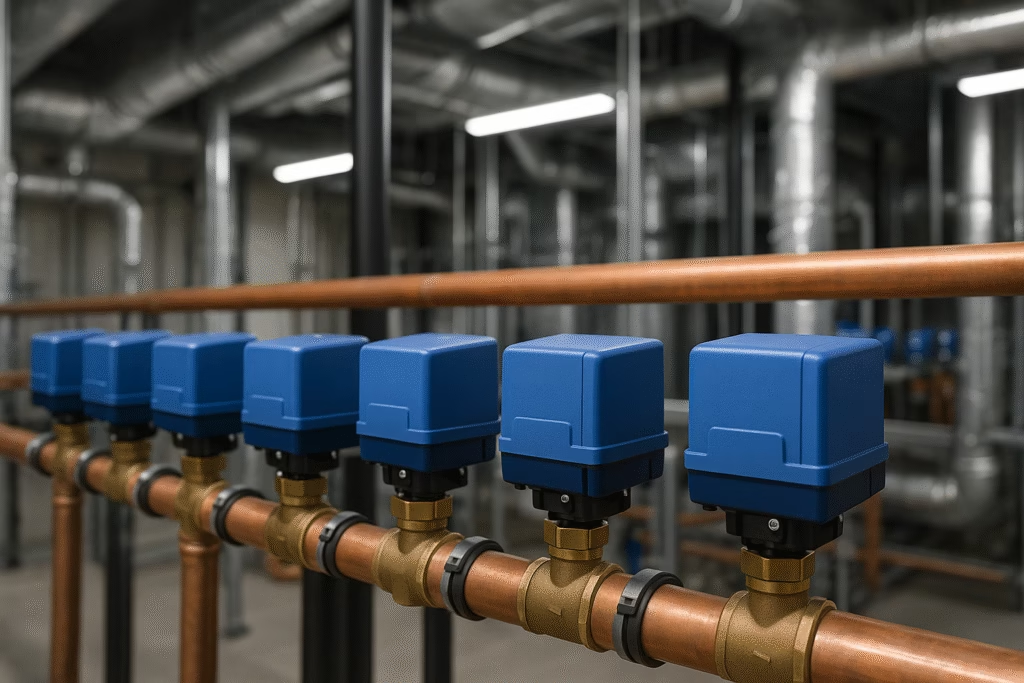
- Electric Modulating Actuators (PIBCV): Ideal for sophisticated hydronic systems, balancing pressure and temperature with advanced control accuracy.
- Variable Air Volume (VAV) Actuators: Tailored for individual zone airflow regulation, improving occupant comfort and optimizing energy usage.
- Smart Actuators: Incorporating sensors and digital communication, these actuators offer real-time monitoring and autonomous operational adjustments, significantly enhancing overall system performance and reducing energy consumption.
Conclusion
Selecting the correct actuator is critical for HVAC system efficiency, operational reliability, and reduced energy use. Adhering to this comprehensive modern guide ensures optimized system performance, improved energy efficiency, and extended service life of your equipment.
Essential Key Takeaways
- Precisely calculate torque requirements, incorporating a minimum of 25% safety margin.
- Select actuator types (electric, pneumatic, spring return) appropriate to application-specific requirements.
- Prioritize compatibility with advanced digital control systems to ensure efficiency and operational precision.
Choosing the right actuator today secures the HVAC system’s long-term efficiency, reliability, safety, and cost-effectiveness.